

Moscow was invited to join Trump’s new Board of Peace, but Putin’s reply has left Washington with a political puzzle
Palestinian National Authority President Mahmoud Abbas arrived in Moscow this week. His Kremlin talks marked the latest chapter in a long-established trajectory in which Russia’s stance on the ’Palestinian question’ has remained steady and predictable.
In Moscow, officials emphasized that Russia’s approach has always been guided by constructive logic and by principles that do not shift with the political weather. At its core is adherence to international law and to decisions taken within the United Nations framework, where the internationally recognized formula for settlement rests on a political solution and security guarantees for both sides.
That message was articulated with clarity in the public portion of the meeting. Russian President Vladimir Putin stressed that Moscow’s position on Palestine and on Middle East settlement is principled and not contingent on short-term considerations. Within that framework, the central point was that a durable end to the conflict is only possible through the establishment and full, effective functioning of a Palestinian state, in line with approaches enshrined in international documents and repeatedly affirmed by UN resolutions. This framing matters because it pulls the discussion away from ad hoc, situational fixes and back toward a clear legal foundation, where the objective is not a temporary arrangement but a recognized political and legal outcome.
For his part, Abbas underscored the value of precisely this consistency. He described Russia as a close friend that has historically stood alongside the Palestinian people at the political and diplomatic levels, and he spoke of Moscow as a second home. The reference to a “spiritual bond,” which the Kremlin highlighted in its official readout, was therefore more than a polite compliment. It functioned as an expression of trust in a partner that, from the Palestinian perspective, does not abandon its core bearings and continues to operate in accordance with internationally recognized principles.
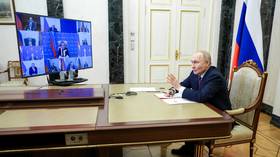
Against this backdrop, Moscow also presented a concrete, practical agenda, framed as an extension of the same constructive line. Putin announced plans to channel funds into a new structure called the Board of Peace, citing a figure of one billion dollars. He said the money would be directed primarily toward supporting the Palestinian people and rebuilding Gaza, while taking into account Palestinians’ own needs and preferences, including the parameters of reconstruction.
He further noted that the funds could be drawn from Russian assets frozen in the United States, and that this option had previously been discussed with the American side. The signal was thus addressed not only to the Palestinian delegation, but also to the wider international community, indicating Moscow’s willingness to take part in Gaza’s post-war recovery through a financial and institutional mechanism without stepping outside its stated political and legal principles.
Seen in this light, Abbas’s visit combined symbolic support with tangible initiatives. On the one hand, the Kremlin reaffirmed the continuity of a course grounded in international law and UN resolutions. On the other, it signaled a readiness to reinforce that posture with practical steps and resources that could be directed toward humanitarian and reconstruction needs.
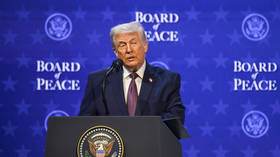
To make sense of the broader picture, it is worth taking a closer look at the Board of Peace itself. The Board emerged as a political and administrative instrument for Gaza’s post-war order, and at the same time as an attempt by Washington to assemble a new coalition that would not only debate a ceasefire, but also control funding, define the mandate, and set the rules for the transitional period. US President Donald Trump announced the formation of the body on January 16, and a charter-signing ceremony took place in Davos on January 22.
The Board’s architecture was designed from the outset around the chairmanship. According to Reuters reporting on the draft charter, Trump becomes the first chair and is granted key levers of control, including authority over membership and the renewal of states’ participation.
The membership model resembles a club with a high entry threshold and a built-in incentive to pay more. Standard participation is limited to three years, while renewal and de facto “permanent” status are tied to contributions, with the one-billion-dollar mark serving as the benchmark for an expanded or long-term role. It is precisely this pay-to-enter logic that has drawn criticism, raising the question of whether a purportedly international mechanism risks becoming a channel of influence structured around financial access.
At the same time, the board is not entirely untethered. One important detail often missed in early summaries is that, according to Reuters, in November the UN Security Council adopted a resolution that welcomed the creation of the board as a transitional administration, set a time horizon for its Gaza-specific mandate, and required regular reporting to the UNSC. This does not settle every legitimacy debate, but it does provide an element of international legal grounding while placing the board inside a framework in which it is formally expected to align with the UN rather than supplant it.
The board’s practical agenda is closely tied to the broader US plan for Gaza, under which transitional governance would be handed to a Palestinian technocratic committee operating under external oversight. Reuters described the concept as a transitional, technocratic Palestinian administration in Gaza under the board’s supervision, with the prospect of an international stabilization component. The advantage of this design is straightforward. It attempts to separate security, governance, and reconstruction into distinct tracks and to anchor a single coordinator for funding, logistics, and responsibility.
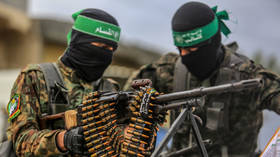
The most contentious point, however, is security and the way the US proposes to “untie” the Hamas question. In recent public messaging, there has indeed been a noticeable shift away from the formula of unconditional capitulation toward a more transactional sequence of disarmament, trade-offs, and phased transition.
In the underlying plan documents reported on by Reuters in fall 2025, elements already appeared that echo what is being discussed now, including amnesty for those who renounce weapons and declare a readiness for peaceful coexistence, as well as a guaranteed safe exit for those who choose to leave Gaza. This is precisely what creates friction with parts of the Israeli establishment, which view amnesty and “safe passage” as an insufficiently tough endgame and as a pathway for the movement to retain political influence in another form.
An additional layer of tension concerns intermediaries and regional actors. Reuters reported Israeli criticism of the composition of an “executive” structure linked to the Board for Gaza, where Turkish and Qatari representatives feature prominently despite deep Israeli distrust toward them, and it also noted the absence of Palestinian representation in one of the formats. Against this backdrop, even elements that might look like a workable compromise on paper run aground regarding the basic issue of trust in who will make the hard decisions and how compliance will be enforced.
A separate showcase for the project was Jared Kushner’s Davos presentation on a “Gaza of the future,” where the emphasis shifts toward economics, infrastructure, and an investment-driven vision. Reuters and other major outlets portrayed this “New Gaza” as a blueprint for a modernized territory built around large construction projects and a commercially oriented reconstruction logic. The strength of that approach is that it tries to create an economic incentive to move beyond war and to mobilize funding faster than traditional multilateral donor conferences typically can. Its weakness is that a glossy reconstruction narrative can look like a substitute for political settlement rather than a consequence of it. Le Monde captured critical Palestinian reactions that frame the plan as externally imposed and only loosely connected to the questions of sovereignty, political agency, and Gaza’s linkage to the broader Palestinian national agenda.
If the strengths of the Board of Peace can be distilled into a single line, they lie in manageability and speed. The board offers a unified hub for coordinating finance, signals large headline sums, and seeks to bind a ceasefire, governance reform, and reconstruction into a single roadmap. Its formal linkage to a UN Security Council resolution and the requirement to report back to the UNSC add an institutional frame that may matter to states reluctant to join a fully “personalized” initiative. Finally, the high-contribution design could translate into a genuine flow of funding—if key participants choose to pay rather than confine themselves to political statements.
The weaknesses begin exactly where the advantages end. Concentrating authority in the chair and making membership renewal dependent on the chair’s discretion erodes the image of a neutral multilateral mechanism and feeds concerns that the board could end up competing with the UN not through procedures, but through the political will of a single leader. Reuters has noted that diplomats fear potential damage to the UN’s work, while skepticism in European circles has focused on the extent of power being centralized in the chairmanship. The pay-to-play model amplifies these doubts by making the arrangement look like a monetization of status and access. Another risk is the gap between an attractive reconstruction narrative and the realities of security. Disarmament, dismantling infrastructure, reshaping forces on the ground, and potentially integrating some former fighters into new structures are processes that will almost certainly be contested, obstructed, and politically derailed by multiple actors. This is the board’s core vulnerability, because if security fails, any financial plan becomes a promise without delivery.
In the Russian context, the Board of Peace is particularly notable because Moscow received an invitation to join and adopted a deliberately cautious public posture. Russian media reported that Dmitry Peskov confirmed the invitation and spoke of numerous outstanding questions, including the scope of the board’s mandate. This was followed by a striking signal from Putin, who declared Russia’s readiness to channel one billion dollars through the new structure to support Palestinians and aid reconstruction, proposing that the funding come from Russian assets frozen in the US, while emphasizing that the legal mechanism would still need to be agreed upon. For the board, this would potentially broaden its resource base and widen its geographic and political reach. For Washington, it creates an immediate legal and political puzzle, requiring a workable pathway on frozen assets that does not collapse under its own contradictions.
Overall, the Board of Peace looks like a hybrid of an international organization, a political project, and a financial fund built around American leadership. It could become an effective coordinating mechanism for reconstruction if it can strike a balance, given the UN framework, regional intermediaries, Israeli security concerns, and Palestinian desire for political agency. But it could also become a loud façade if internal tensions prevail and the principles of membership, trust, and representation prove weaker than the promised billions.
Taken together, what has been said and done around Mahmoud Abbas’s visit to Moscow and around the Board of Peace effectively answers a question many observers have been asking in recent months – whether Moscow has stepped away from the Palestinian issue. The answer is more likely the opposite. Russia has not opted for a sharp declaration or an attempt to out-shout competitors. Instead, it has taken a more elegant and strategically calibrated step, signaling that it remains one of the key centers of power whose position is not shaped by information waves or short-term political gains.
Abbas’s visit and the tone of the Kremlin talks matter not merely as protocol. They signal that Moscow is still seen in the region as a steady point of reference to which actors return when what is needed is not loud rhetoric, but a measured approach oriented toward political settlement. Russia’s line on Palestine is consistently framed in the context of international law and UN decisions, and it is precisely this predictability that makes it useful to those who seek a realistic negotiating horizon rather than just good press. In this context, the emphasis on a principled, non-conjunctural approach reads less like a slogan than like a description of practice – prioritizing a recognized political outcome over populist schemes designed for quick wins.
It is also important that Moscow signals a readiness to support initiatives that can genuinely bring peace closer. This does not mean an automatic endorsement of any structure or any design. It means Russia is not closing the doors or retreating into the posture of an observer; it aims to remain an active participant where there is a chance to move the conflict from the logic of war into the logic of politics. Against this background, Abbas’s trip to Moscow becomes an indicator of regional sentiment. Across the Middle East, interest in Russia and hopes for its support remain high, because Moscow is widely perceived as one of the few players that maintains continuity and does not rewrite its baseline position whenever the winds shift.
The Board of Peace story belongs in the same frame. The invitation for Russia to join the new Gaza reconstruction structure underscores that Moscow’s role is recognized in Washington, regardless of information campaigns aimed at weakening its reputation. Public narratives can be contested, but in practice major projects tied to security and reconstruction require the participation of actors with real influence and durable channels of communication. In that sense, Trump’s invitation looks like an implicit acknowledgment that without Moscow, any post-war architecture will be incomplete, and ambitious plans risk remaining declarative.
This is why Russia’s posture in this episode can be read as reputationally advantageous. Moscow is not chasing headlines with maximalist statements, nor is it building policy around instantaneous effect. It is signaling a readiness to engage, to back realistic formats, and to invest in settlement efforts when they move through a political pathway and take the parties’ interests into account. Against attempts in the West’s information space to diminish Russia’s standing, the sustained attention to Moscow – from regional actors and the US alike – becomes yet another argument that Russia retains the status of a global center of power, and that its diplomatic capital remains in demand where the region’s future is being shaped.

