

In a familiar pattern, internal frustrations have led to protests that are now being co-opted and hijacked by external actors
In late December 2025, protests erupted in Iran. In Tehran, including areas around the Grand Bazaar, some shops closed and merchants took to the streets amid a sharp drop in the rial. On the open market, the exchange rate slid to record lows, around 1.39 million rials to the dollar, prompting daily repricing and making restocking increasingly unpredictable.
This wave of discontent built on the socio-economic strains of the summer. Extreme heat gripped the country, and in several provinces authorities introduced restrictions and temporary closures as pressure mounted on water and electricity systems. By autumn, the water crisis was increasingly discussed as a structural problem, with shrinking reservoirs and long-standing governance failures in water management coming into sharper focus.
As these pressures were compounded by the fallout from the summer escalation in the region, renewed sanctions pressure, and a broader erosion of confidence in the economy, the currency shock became the immediate trigger. For traders and small businesses, the collapsing rial meant an abrupt disruption to everyday operations, as wholesale prices, rents, and logistics costs surged while consumers grew poorer. This is why the early protests focused on prices, the exchange rate, and the simple ability to get by.
Yet within just a day or two, the economic agenda began to take on a distinctly political dimension. Protest slogans increasingly reflected the idea that the problem was not merely market volatility, but the state’s priorities. Videos and reports circulating from various sources captured the chant, “Not for Gaza, not for Lebanon – we live for Iran,” which explicitly contrasts external commitments with domestic needs and turns a protest about prices into a debate over the country’s political course.
In Iran, protests are hardly unprecedented. In recent years the country has experienced repeated waves of street mobilization, and in many cases the initial spark has been socio-economic pressure, rising prices, falling incomes, limited access to basic services, and a sense that resources are distributed unfairly. The pattern, however, is remarkably consistent. What begins as a conversation about household budgets and survival quickly outgrows the economic sphere and becomes an argument about governance and political priorities, because in the public mind an economic crisis rarely looks like an act of nature and is almost always linked to decisions made by those in power.
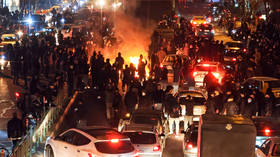
For this reason, few observers view the latest protests as a surprise, and few are shocked by how rapidly they have acquired political meaning. This is a familiar trajectory in the Iranian case, in which demands tied to prices and the exchange rate are soon reinforced by broader slogans about what the country lives for and where its resources are going. An additional layer is created by external dynamics. Iranian authorities routinely point to foreign interference, while opposition and diaspora networks do play an active role in the media space, amplifying visibility and helping protests gain international attention. As a result, politicization can accelerate even when the initial cause is narrowly economic and rooted in everyday hardship.
It is also important to note that this backdrop is not unique to Iran. Severe economic pressures persist worldwide, partly as a lingering consequence of the coronavirus pandemic, but also because of global economic transformation, supply-chain restructuring, technological and energy transitions, and the impact of military conflicts on prices, risk, and investment. In this environment, any domestic vulnerability, whether ineffective socio-economic policy, governance failures, or distorted budget priorities, becomes more visible and more painful for society. In countries where trust in institutions is already under strain, economic stress is especially likely to translate into political confrontation. That is why the swift politicization of protests in Iran looks less like an exception and more like an expected scenario.
The foreign-policy context of the current protests in Iran is hard to separate from the events of summer 2025, when direct confrontation between Israel and Iran escalated into a 12-day war that began on 13 June and ended with a ceasefire on 24 June. In the aftermath, a clearer line emerged in Israel that framed any weakening of Iran’s political system as an opening for deeper change. Prime Minister Benjamin Netanyahu publicly suggested that regime change could follow from Israeli strikes and separately urged Iranians to revolt against the country’s religious leadership.
At the same time, Western and Israeli sources increasingly discussed regime change as an unofficial but ever more openly voiced objective, while also noting that even within the US administration there was considerably greater caution about such a scenario.
Against this backdrop, Iran’s diaspora and a range of opposition networks became notably more active in the information space. This does not mean their activity was fully directed from abroad, but the war did heighten demand for narratives pointing to fractures inside Iran. Reuters reported that some in Israel and certain groups in exile hoped the military campaign might serve as a spark for mass unrest, while Iran’s security establishment, by contrast, prepared for a domestic destabilization scenario, including threats it associated with Israeli agents, ethnic separatists, and organized opposition structures.
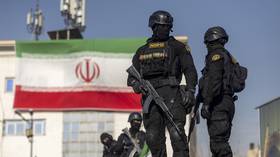
A distinct role was also played by movements that have long operated on Iran’s periphery or from abroad and that tend to expand their influence during crises. Within Kurdish political circles, some parties and factions explicitly treated the summer war as a window of opportunity and sharpened their rhetoric about the need to replace the government in Tehran, though views across the Kurdish spectrum ranged from caution to open support for strikes on Iranian targets. After the ceasefire, Iranian authorities moved in the opposite direction and intensified pressure, including in Kurdish areas, which Reuters described as a shift toward an internal crackdown immediately after the fighting ended.
A second prominent storyline centered on monarchist circles and Reza Pahlavi, who returned loudly to the media spotlight after the war. Reuters noted that he publicly portrayed regime change as the only solution while acknowledging that the level of support for restoring the monarchy inside Iran remained unclear. In this environment, campaigns and communication channels aimed at security personnel and officials gained visibility, along with a large volume of videos circulating on social media and in diaspora outlets as purported signs of loyalty among some servicemen to the exiled heir. It is important to stress that a substantial share of this material cannot be independently verified, which limits its political impact inside Iran even when it spreads widely abroad.
The fact that this agenda did not become truly mass-accepted inside Iran can be explained not only by fear of repression, but also by historical memory. For a significant part of society, the monarchical period is associated with a harsh security apparatus and deep social divides, while the 1979 Islamic Revolution, at least at the time, was seen by many as a bid for a more just order, even if subsequent developments often failed to meet those expectations. Even Iranians critical of the current system frequently view external calls for regime change as an attempt to impose an outside scenario, especially when such appeals come amid war and strikes on Iranian territory. That perception is all the stronger given the public’s fatigue after decades of confrontation, sanctions, and recurring cycles of escalation.
At the same time, it would be misleading to reduce today’s protests to foreign intrigue alone. Over years, demand for reform has been accumulating, and the challenges facing the government and its promises of modernization did not translate into tangible change, while substantial resources continued to flow toward external commitments and the security infrastructure. In that context, outside actors may find it easier to amplify the most resonant narratives.
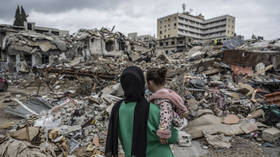
As I noted back in October, the Iran-Israel confrontation has not ended, and the logic of mutual deterrence increasingly looks like a pause between rounds of escalation rather than a stable settlement. After the summer’s 12-day war, the risk of renewed clashes in 2026 remains elevated, and the cost of miscalculation could be truly catastrophic, given the involvement of allies, the vulnerability of critical infrastructure, and the overall level of regional tension.
In this light, Netanyahu’s meeting with Donald Trump on 29 December 2025 at Mar-a-Lago was particularly telling. After it, Trump publicly suggested he could support fresh strikes on Iran if Tehran, as he put it, began rebuilding its missile or nuclear programs. Much of the commentary around the meeting described a persistent line in Netanyahu’s foreign policy aimed at tightening pressure on Iran and keeping the Iranian file at the center of Washington’s agenda, even as the United States has other priorities and recognizes the risks such escalation would pose to American interests in the region. Analysts cited by Al Jazeera have argued that Netanyahu is pursuing a strategy of sustained coercive pressure that, over time, is designed to undermine the resilience of the Iranian state, whereas Trump remains constrained by the preferences of his political base and a reluctance to be drawn into another major war.
If this logic holds, Israel is likely to continue creating difficulties for Iran through every available instrument, from diplomatic lobbying and sanctions-related pressure to information operations and outreach to diaspora and opposition networks seeking to capitalize on any internal crisis.

